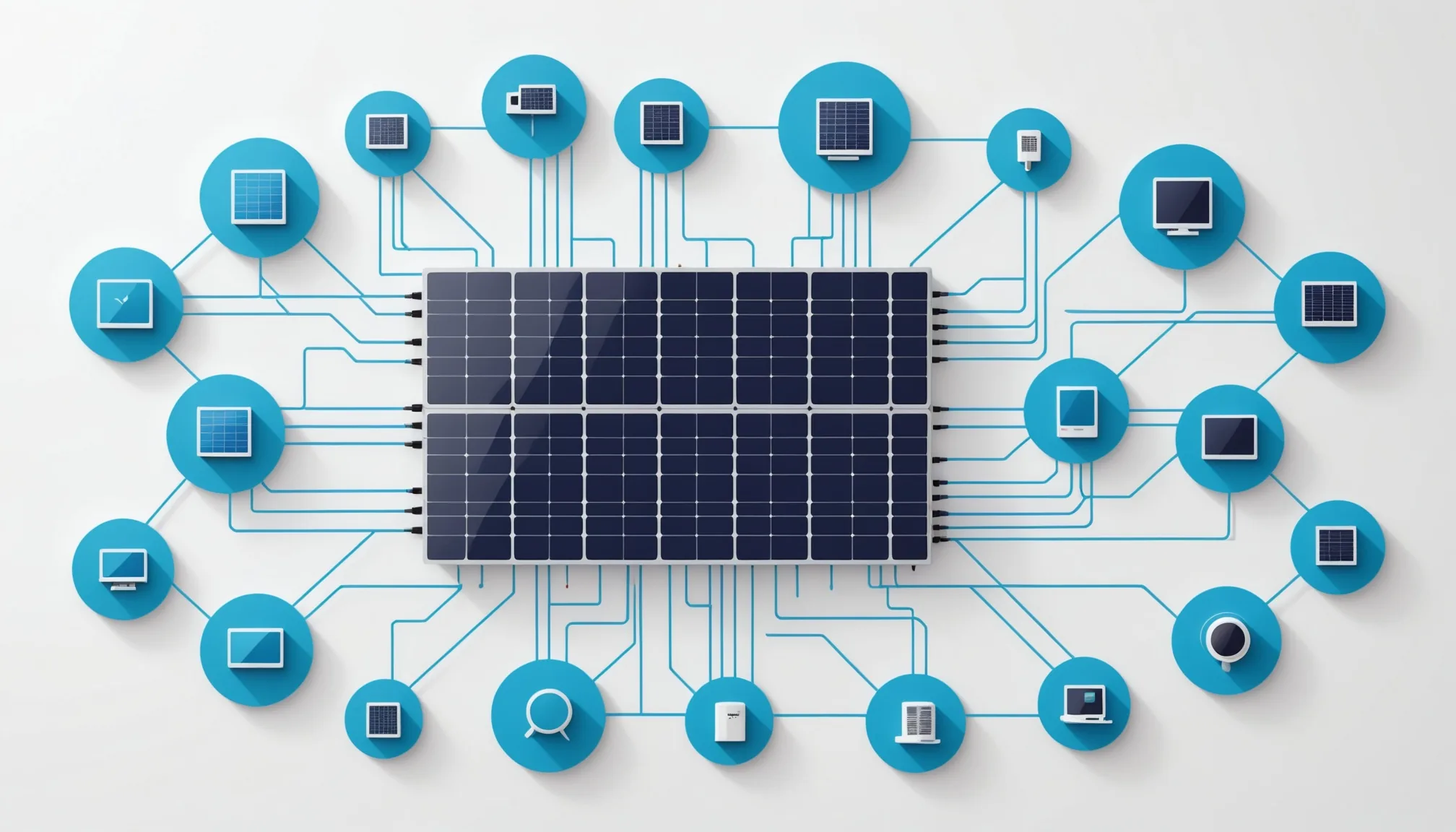
The integration trap is what happens when a grid-edge software startup lets its first hardware integration decision compound into an architectural constraint that shapes the entire company. We have seen it play out the same way enough times that it has become recognizable as a pattern, not just a string of bad luck.
Here is how it typically starts. The founding team has deep domain knowledge and a clear product vision. They build their first integration — usually with one or two hardware vendors that are most relevant to their first customer. The integration is good enough to land the customer. Then the second customer wants a different device type. The third wants a vendor the first two do not use. By the time the startup is 18 months old, they have four bespoke integrations, each built by a different engineer, each with its own patterns and quirks, and integration maintenance is consuming 35 percent of the engineering team's capacity.
This is the trap. And it is worth understanding because the way out is much harder than the way in.
Why early-stage teams build the trap
Integration abstraction layers take time to design and build. A startup in its first year is making a rational tradeoff when it builds a quick, direct integration to land a specific customer rather than building a general-purpose normalization layer first. The abstraction layer does not generate revenue; the customer integration does.
The problem is the compounding. The first bespoke integration is a reasonable tradeoff. The second, built without a normalization layer, copies the pattern of the first and adds its own layer of complexity. By the third or fourth, the team is making architecture decisions under time pressure with four existing incompatible integration patterns as constraints. Building a normalization layer at that point requires refactoring all four existing integrations — a project that competes with the next customer integration that also needs to ship.
The trap is not the first integration decision. It is the failure to recognize the pattern after the second or third and make the architectural investment before the refactoring cost becomes prohibitive.
The DER-specific version of the trap
Grid-edge software has a specific version of the integration trap that is worse than the general case because of the protocol diversity involved. A typical SaaS product integrates with a handful of APIs, all of which use REST and OAuth 2.0. A DER software product integrates with APIs that speak OCPP 1.6, OCPP 2.0, OpenADR 2.0a, OpenADR 2.0b, IEEE 2030.5, Modbus/TCP, and various proprietary REST and MQTT implementations.
Each protocol requires a different implementation skill set. IEEE 2030.5 requires understanding XML-based REST, TAI timestamps, and certificate-based authentication. OCPP requires maintaining persistent WebSocket connections with state management across restarts. OpenADR requires implementing a VEN that handles event lifecycles and generates compliance reports.
Without an abstraction layer, this protocol expertise is spread across the application codebase rather than concentrated in protocol-specific adapters. The engineer who knows IEEE 2030.5 becomes the only person who can debug solar inverter integration issues. The engineer who knows OCPP is the single point of failure for EV charger incidents. Institutional knowledge fragments along protocol lines.
The early signals that you are in the trap
It helps to recognize the trap before it becomes structural. The early signals:
- Integration maintenance starts appearing as a recurring item on sprint retrospectives
- Adding a new hardware vendor requires touching existing application code, not just adding an adapter
- Different parts of the codebase have different patterns for handling the same device type
- Integration bugs surface in production that are impossible to reproduce in development because they depend on vendor-specific behaviors the team did not know about
- The team's estimate for adding a new vendor integration keeps increasing, not decreasing, as they gain experience
That last point is counterintuitive. You would expect integration estimates to decrease as the team gets better at integrations. In a well-architected codebase, they do. In an integration-trap codebase, they increase because each new integration has to navigate the accumulated complexity of the existing ones.
When your nth integration takes longer than your first, you are not getting better at integrations. You are accumulating complexity. That is the trap telling you it is time to build the abstraction layer.
Getting out: what the refactoring actually involves
Escaping the integration trap at 18 months looks different from doing it right at 6 months, but both are possible. The approach that works:
Define the canonical data model first. Before touching any code, define what a solar inverter response looks like, what a battery status looks like, what an EV charger session event looks like in your application's internal model. This is the target your adapters will map to.
Build one adapter at a time, in parallel with current operations. Pick one vendor integration and build a new adapter that maps it to the canonical model. Run the old integration and the new adapter in parallel until the adapter is validated. Then cut over and retire the old integration. Repeat for each vendor.
Do not refactor the application layer until the adapters are stable. The temptation is to refactor everything at once. Resist it. Get the adapters working and tested first. Then progressively update the application layer to consume the canonical model rather than vendor-specific formats.
This approach takes longer than a flag-day rewrite, but it maintains continuity of service and reduces the risk of a refactoring project that runs months over schedule while customer-facing bugs accumulate.
The time to avoid the trap is before the third integration
If you are building a grid-edge software product and you are planning your second or third vendor integration, you are at the decision point. The first integration was unavoidable without the benefit of hindsight. The second one you can get away with if the first was well-structured. By the third, the pattern is established.
Investing four to six weeks in a normalization layer at the three-vendor mark costs you a sprint and a half. Not investing costs you a year of increasing maintenance overhead and a painful architectural refactor. The DER market is going to keep adding new device categories and new vendors. Build the abstraction layer before the integration surface grows large enough to make it prohibitive.